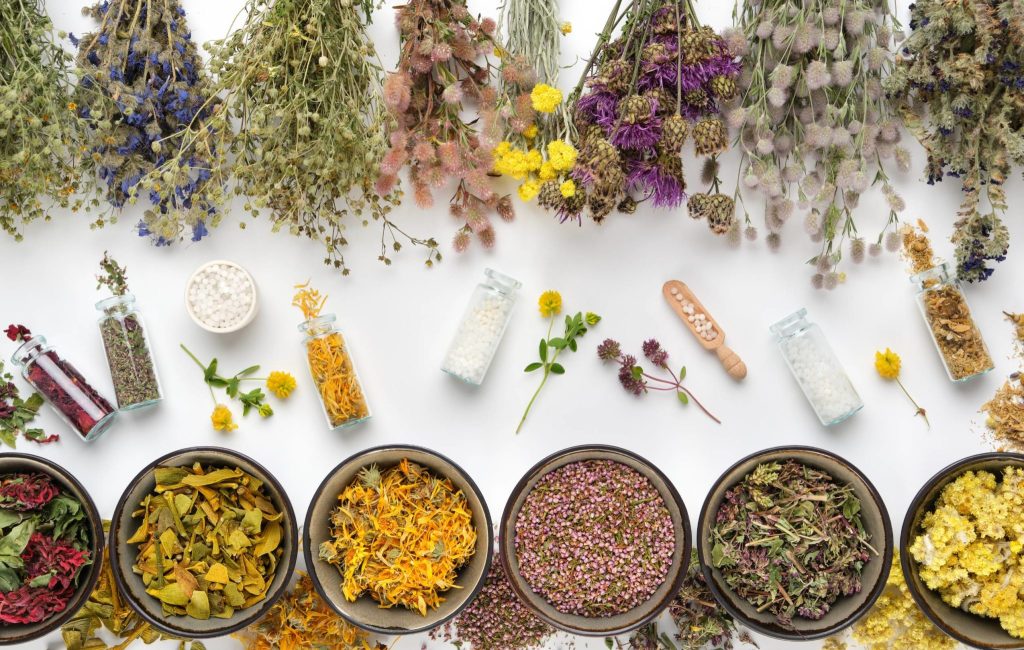
One thing I’ve seen from first time herb users is how confusing the world of herbs can be. I was there a long time ago, and I know how frustrating it is to face a wall of herb names and not know what you’re looking at. Years ago I made this guide as a quick reference for people who aren’t on solid ground in herbal knowledge. It’s called Herbs In Action and can be downloaded as a PDF for reference. It doesn’t contain every herb and ailment, but it covers the basics. You can find these herbs in my Esty shop for purchase.

A Simple Way to Think About Herbs
When most people begin learning about herbs, they often focus on individual plants. They ask questions like:
- What does chamomile do?
- What is lemon balm used for?
- Should I take echinacea or elderberry?
Those are good questions, but they can sometimes make things more difficult.
A simpler approach is to start with what you’re trying to accomplish.
Are you looking for digestive support? Better sleep? Seasonal immune support?
Once you know your goal, it’s much easier to learn which herbs have traditionally been used for that purpose.

Why I Created Herbs in Action
Years ago, I put together a quick-reference guide called Herbs in Action.
I didn’t want to make an encyclopedia of herbal medicine. Rather, I wanted something simple that could help beginners get their bearings.
It lists herbs by traditional uses, making it easier to see which herbs are most helpful for certain issues.
What You’ll Find In the Download
This single page guide covers many of the basic categories that people commonly explore, including:
- Digestive herbs
- Sleep and relaxation herbs
- Stress-supporting herbs
- Immune-supporting herbs
- Respiratory herbs
- Circulatory herbs
- And other common herbal categories
While it doesn’t include every herb or every possible use, it provides a solid starting point for understanding how different herbs fit into larger groups.
Folks usually find that once they understand the categories, learning individual herbs becomes much easier.

A Good Starting Point, Not the Final Word
One of the biggest lessons I’ve learned over the years is that herbal knowledge comes slowly.
Most herbalists start by learning a handful of plants. Over time, those handfuls grow into dozens and eventually into a much broader understanding. Some aspects of herbs are still unfolding for me after a lifetime of study.
That’s why I encourage people to think of guides like mine as a starting point rather than a final word.
The goal isn’t to memorize everything. It’s to become familiar enough with the landscape that you know where to go next.
Download Your Free Copy
If you’re looking for a simple way to make sense of herbal categories and traditional uses, feel free to download Herbs in Action.
It’s a straightforward reference guide designed to help beginners feel more comfortable navigating the world of herbs.
And if you decide you’d like to try any of the herbs featured in the guide, many of them are available as handcrafted tinctures in my Etsy shop.
Happy learning, and enjoy your herbal journey.

