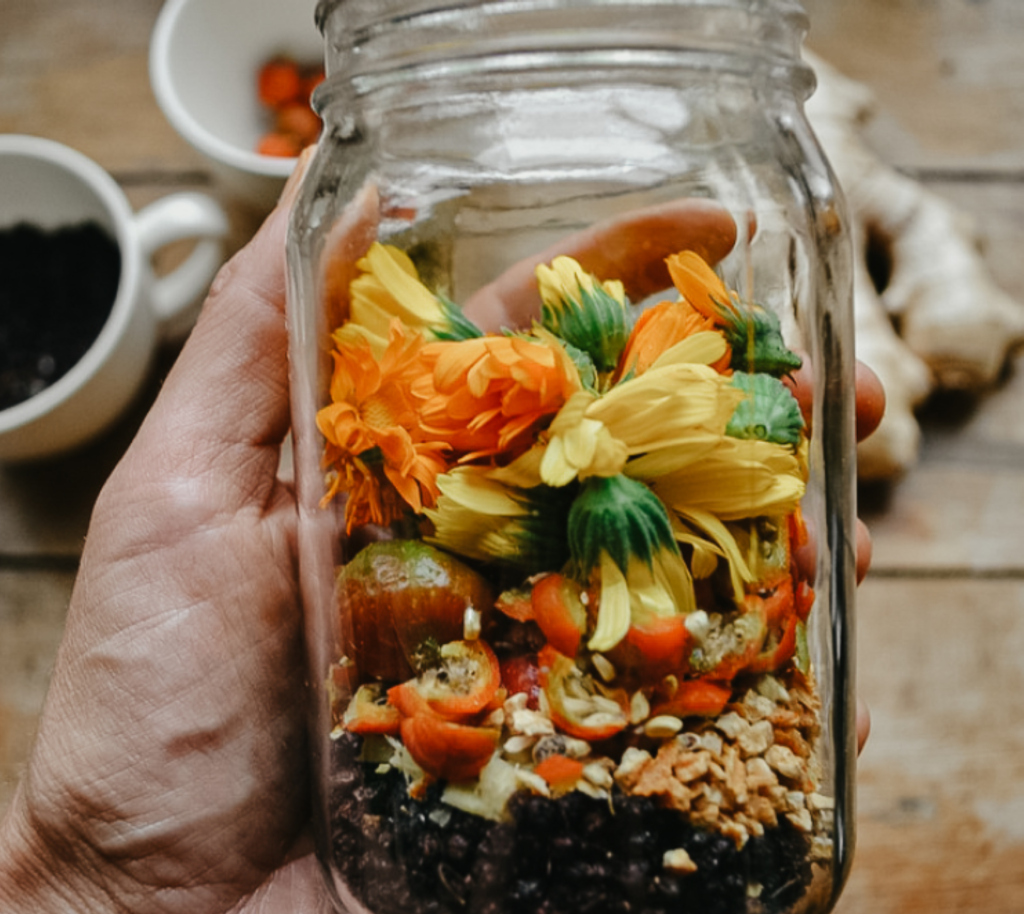
Herbal tinctures are one of the most effective and accessible ways to work with plants. They’re concentrated, shelf-stable, easy to dose, and surprisingly simple to make. If you have herbs, a clean jar, and a bottle of alcohol, you already have everything you need.
This guide walks you through the foundational method I teach for beginners; the same process herbalists have relied on for centuries.
🌼 What Is a Tincture?
A tincture is a liquid extract made by soaking herbs in alcohol (or another solvent) to pull out their beneficial constituents. Alcohol is the most common menstruum because it extracts a wide range of plant compounds and preserves them for years.
Tinctures are:
- Potent
- Long-lasting
- Easy to store
- Convenient to take
Once you learn this method, you can make nearly any single-herb extract you want.
🍃 What You’ll Need
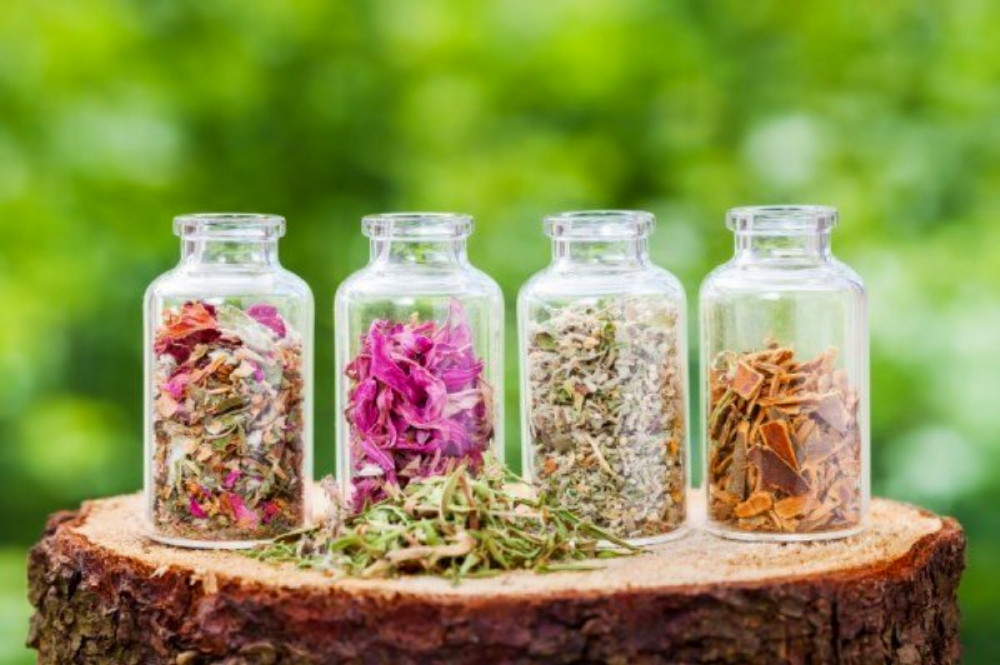
✔ Clean glass jar with a tight lid
✔ Dried or fresh herbs
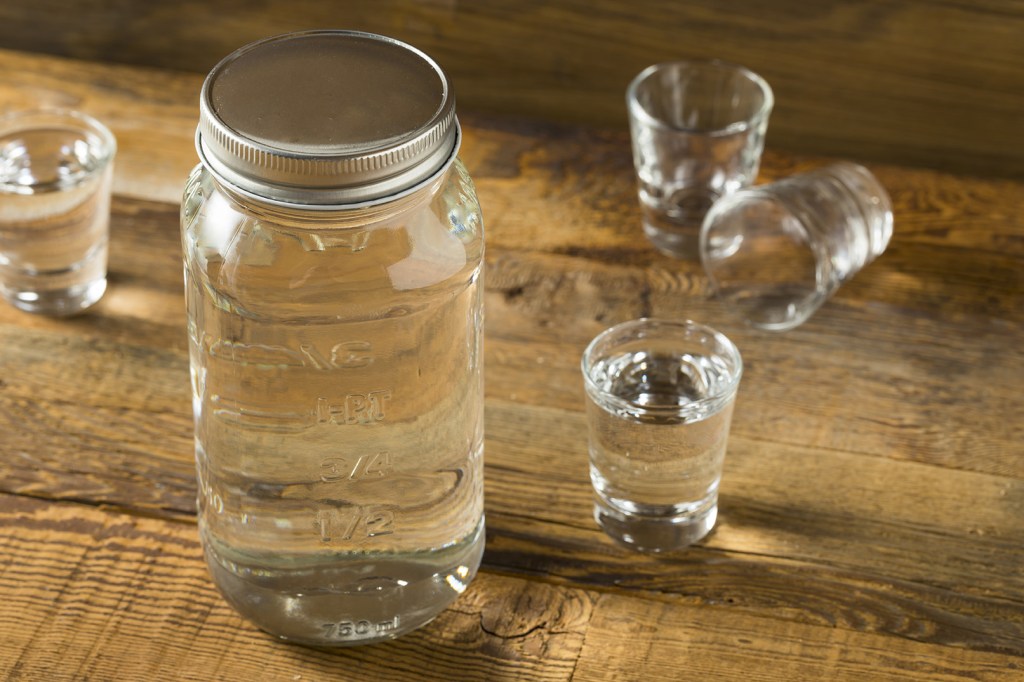
✔ Alcohol (usually 80–100 proof vodka is easiest)
✔ Label + pen
✔ Fine mesh strainer or cheesecloth
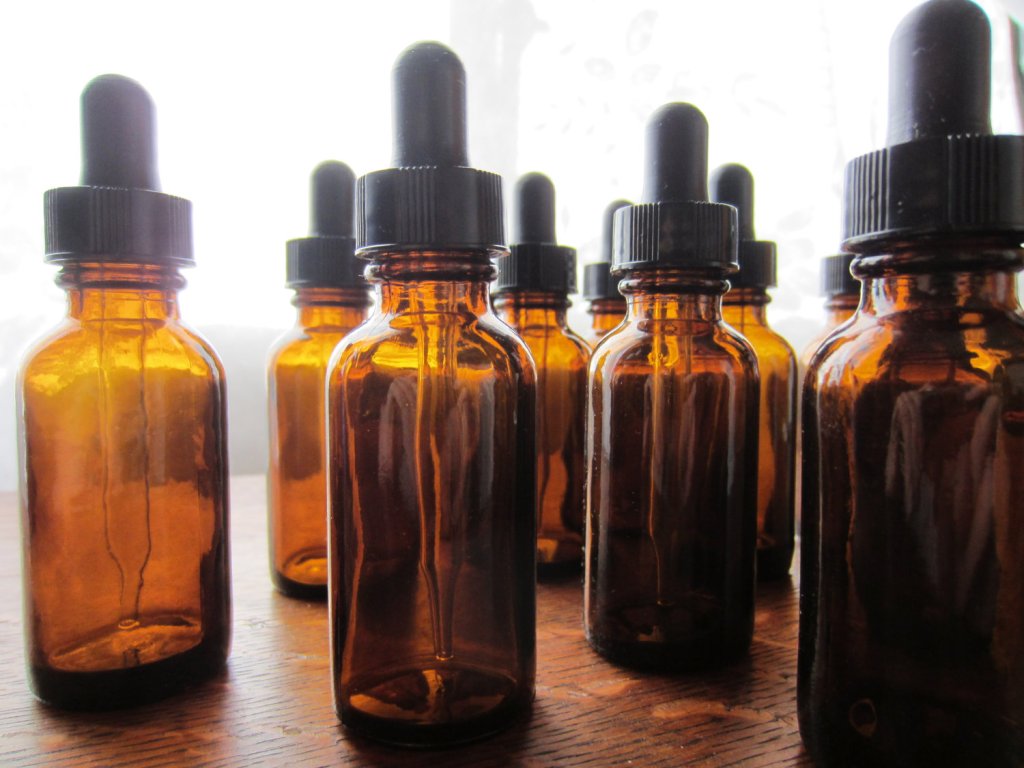
✔ Dark glass dropper bottle(s) for storing
🌿 The Folk Method (Perfect for Beginners)
This is the simplest and most intuitive way to make a tincture with no scales required.
For Fresh Herbs
- Chop herbs to increase surface area
- Loosely fill your jar about ⅔ to ¾ full
- Pour alcohol over the herbs until completely covered
- Make sure the herbs stay submerged (add more alcohol if needed)
- Seal tightly and label with:
- Herb name
- Alcohol type
- Date
For Dried Herbs
- Fill your jar about ½ full — dried herbs expand
- Cover fully with alcohol
- Stir or shake to release air bubbles
- Top off if the herbs absorb liquid
- Seal and label
This method is forgiving, flexible, and excellent for most home herbal needs.
🧪 Optional: The Ratio Method (More Precision)
If you prefer accuracy or if you’re making tinctures for sale, you can use weight-to-volume ratios instead.
Common ratios:
- Fresh herbs: 1:2 (1 part herb by weight to 2 parts liquid by volume)
- Dried herbs: 1:5
This ensures consistency from batch to batch.
⏳ Steeping Time
Tinctures take time to mature. Allow:
- 4–6 weeks for most herbs
- Shake the jar gently every few days (this is important)
- Keep stored at room temperature, out of direct sunlight
Longer steeping won’t hurt. Some herbalists leave their tinctures for months.
💧 Straining & Bottling
When your tincture is ready:
- Strain through cheesecloth or a fine sieve
- Press or squeeze to get every drop (that’s where the good stuff lives!)
- Transfer to dark glass dropper bottles
- Label with:
- Herb
- Alcohol %
- Date finished
Store your tincture in a cool, dark place. Most last 5+ years.
🌱 How to Use a Basic Tincture
Herbal usage varies, but a common tincture dose is:
30–60 drops (½–1 dropperful), 1–3 times per day
Tinctures can be taken:
- Directly on the tongue
- Added to a small amount of water
- Mixed in a tablespoon of tea or juice
It’s important to try and take your tinctures on an empty stomach and wait 15 minutes before eating or drinking anything. This gives the tincture time to absorb in the stomach rather than getting pulled into the intestines with other food where it can lose potency.
And, as always, start with lower doses. Only increase as needed to achieve results. A little usually goes a long way.
🧡 Conclusion
Making your own tinctures connects you directly to the plants you’re working with. It’s simple, empowering, and offers a level of quality you can feel good about. Start with one herb, learn the process, and over time you’ll build your own home apothecary one jar at a time.
If you’d like help choosing beginner-friendly herbs to tincture (like lemon balm, ginger, or nettle), I’m happy to help you pick the best ones for your goals.

